

Books That Help Us Understand Dementia, Memory, and What Remains
There are some things we don’t really want to think about until we have to.
Dementia is one of them.
As we move through our 40s, 50s, 60s, and beyond, many of us will eventually find ourselves watching someone we love navigate a changing relationship with memory.
It might be a parent. A spouse. A sibling. A close friend. Sometimes the changes happen gradually, with little moments that are easy to dismiss at first. Other times, they seem to arrive more quickly.
And one of the hardest parts can be trying to understand what the person we love is actually experiencing.
Why don’t they remember that conversation?
Why are they asking the same question again?
Why can they remember something that happened 40 years ago but not what happened yesterday?
Why are they suddenly frightened, angry, confused, or withdrawn?
And perhaps the most difficult question of all:
How do we continue a relationship with someone whose memories of that relationship are changing?
I’ve found that books can sometimes help us understand things that are incredibly difficult to grasp from the outside.
A good story allows us to step into someone else’s experience for a while. It can help us see memory decline from the perspective of the person living with it, the adult child trying to care for a parent, or the spouse watching someone they love slowly change.
These books don’t provide medical answers, and every person’s experience with dementia is different. But they can offer something else: perspective.
They may help us understand what could be happening when someone’s behavior seems confusing. They may give us a different way to think about conversations. They may remind us that correcting every forgotten detail isn’t always the most important thing. And they can help us reframe a relationship that is changing without assuming that the relationship itself has disappeared.
And there is an added bonus.
These aren’t textbooks about dementia. They’re beautiful stories.
Some are heartbreaking. Some are surprisingly funny. Some are hopeful. Some are mysteries. Some are memoirs. But all of them offer something to think about long after the final page.
And one in particular has stayed with me.
Editor’s Note: When you buy through links on The Well-Spent List, we earn an affiliate commission at no extra cost to you. As an Amazon Associate, I earn from qualifying purchases.
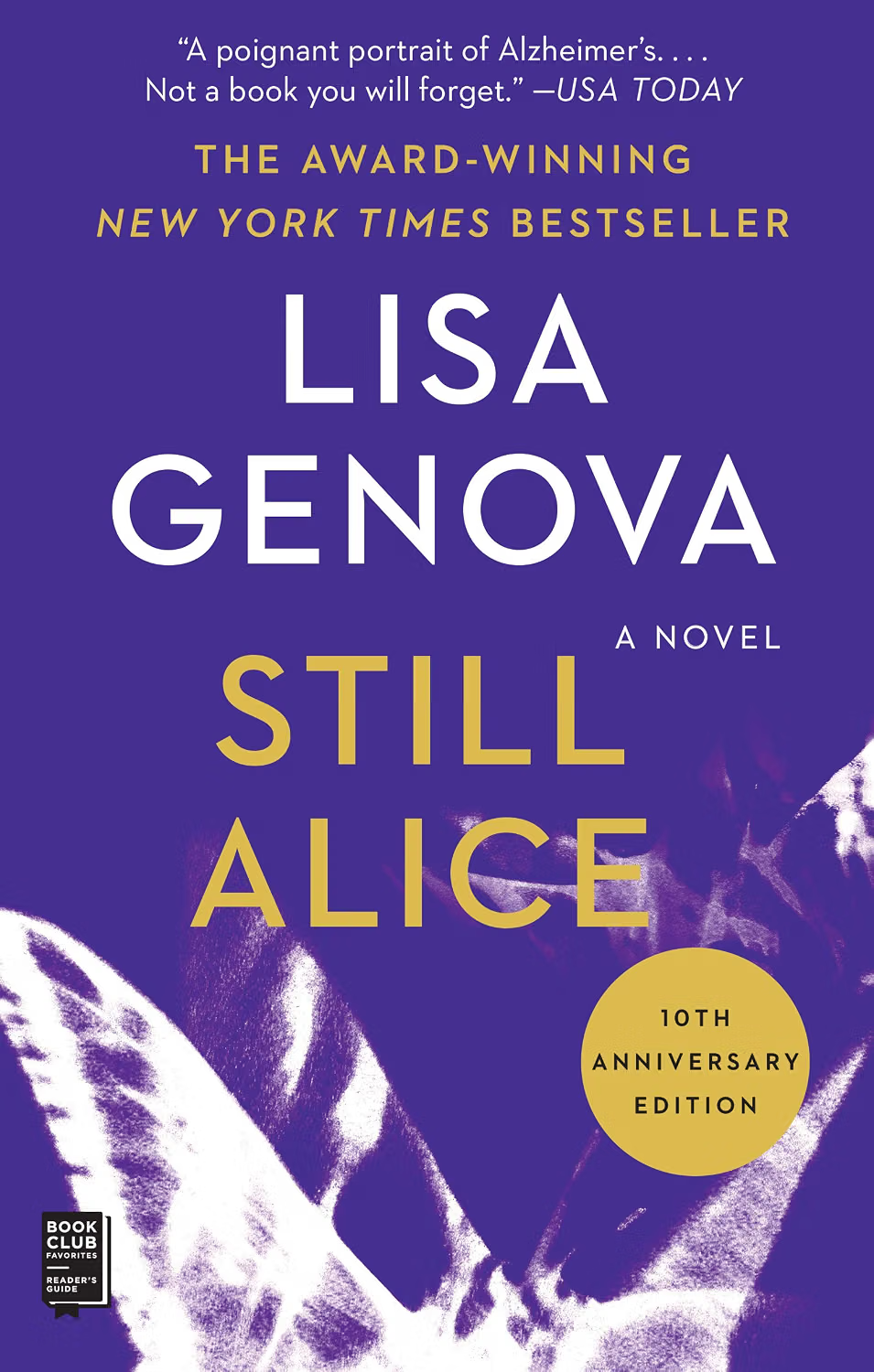
Still Alice by Lisa Genova
Read this if you want: An intimate look at what it feels like to experience early-onset Alzheimer’s from the inside.
If I were recommending just one novel about dementia to someone who had never read one, Still Alice would be very high on my list.
Alice Howland is a successful Harvard professor, wife, and mother of three grown children when she begins experiencing small but increasingly frightening lapses in memory. She is only 50 when she is diagnosed with early-onset Alzheimer’s disease.
What makes the book so powerful is that we experience the progression largely through Alice’s perspective.
At first, the changes are subtle.
Then they become impossible to ignore.
And gradually, the things that have always defined Alice’s life begin slipping away.
Her career. Her independence. Her ability to trust her own mind.
But something else happens too.
She begins to discover that her identity is not entirely dependent on the things she can remember.
That is what makes Still Alice so much more than a book about Alzheimer’s. It is a book about identity, family, dignity, fear, love, and what remains when so much of what we use to define ourselves begins to change.
Why it stays with you: Because Alice’s story forces us to consider a difficult question: If we lose our memories, are we still the same person?
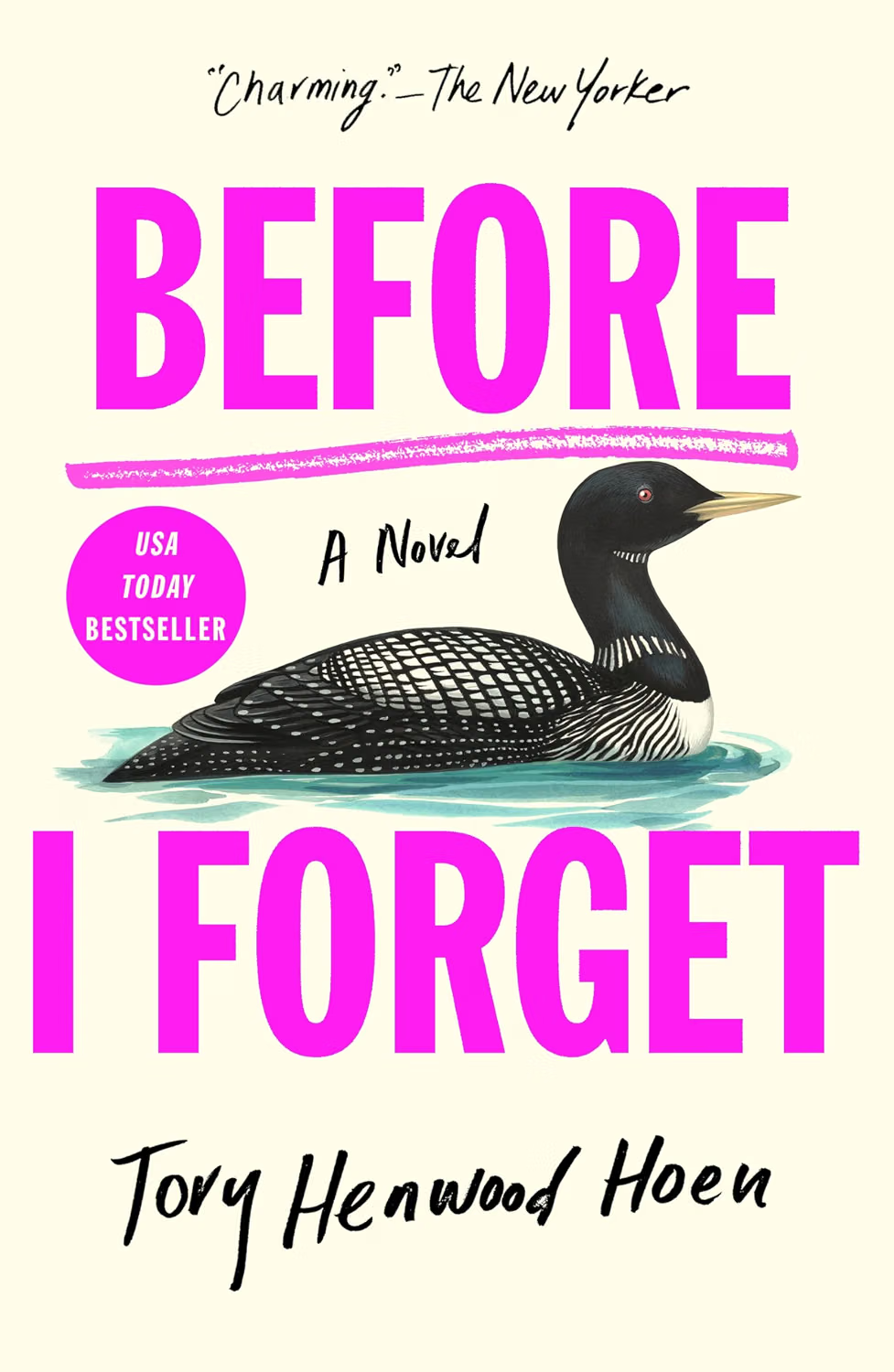
Before I Forget by Tory Henwood Hoen
Read this if you want: A moving, beautifully imagined story about Alzheimer’s, family, and learning to navigate a changing relationship with someone you love.
Of all the books on this list, Before I Forget is the one that has stayed with me most recently.
I finished it, closed the back cover, and found myself still thinking about it.
There are certain books that you enjoy while you’re reading them and then move on to the next thing. And there are others that seem to follow you around a little.
This is one of those books for me.
Tory Henwood Hoen’s novel centers on Cricket, a young woman who returns home to help care for her father, Arthur, as he lives with Alzheimer’s. Their relationship is complicated, as family relationships often are, and the experience of caring for him forces Cricket to confront both the father she remembers and the person he is becoming.
What affected me most wasn’t simply the portrayal of Alzheimer’s.
It was the way the story made me think about how we respond when someone’s memory begins to change.
There are moments in this book that completely reshaped the way I think about memory decline and how we might navigate it with someone we love.
With love.
With compassion.
And, surprisingly, with a little whimsy.
The book doesn’t suggest that any of this is easy. It isn’t. But it offers another way of looking at those moments when reality, memory, and the relationship we have always known no longer line up quite the way they used to.
Instead of always trying to pull someone back to our version of reality, what if we sometimes meet them where they are?
What if the goal isn’t always to make them remember?
What if connection can still exist even when the details of the relationship are becoming harder for them to hold onto?
Those ideas have stayed with me.
And I think that is the mark of a truly memorable book. It doesn’t simply tell you a story. It changes the way you think about something after you’ve finished it.
Why it stays with you: Because it offers a tender reminder that when memory changes, love doesn’t necessarily disappear with it. Sometimes we simply have to learn a new way to express it.
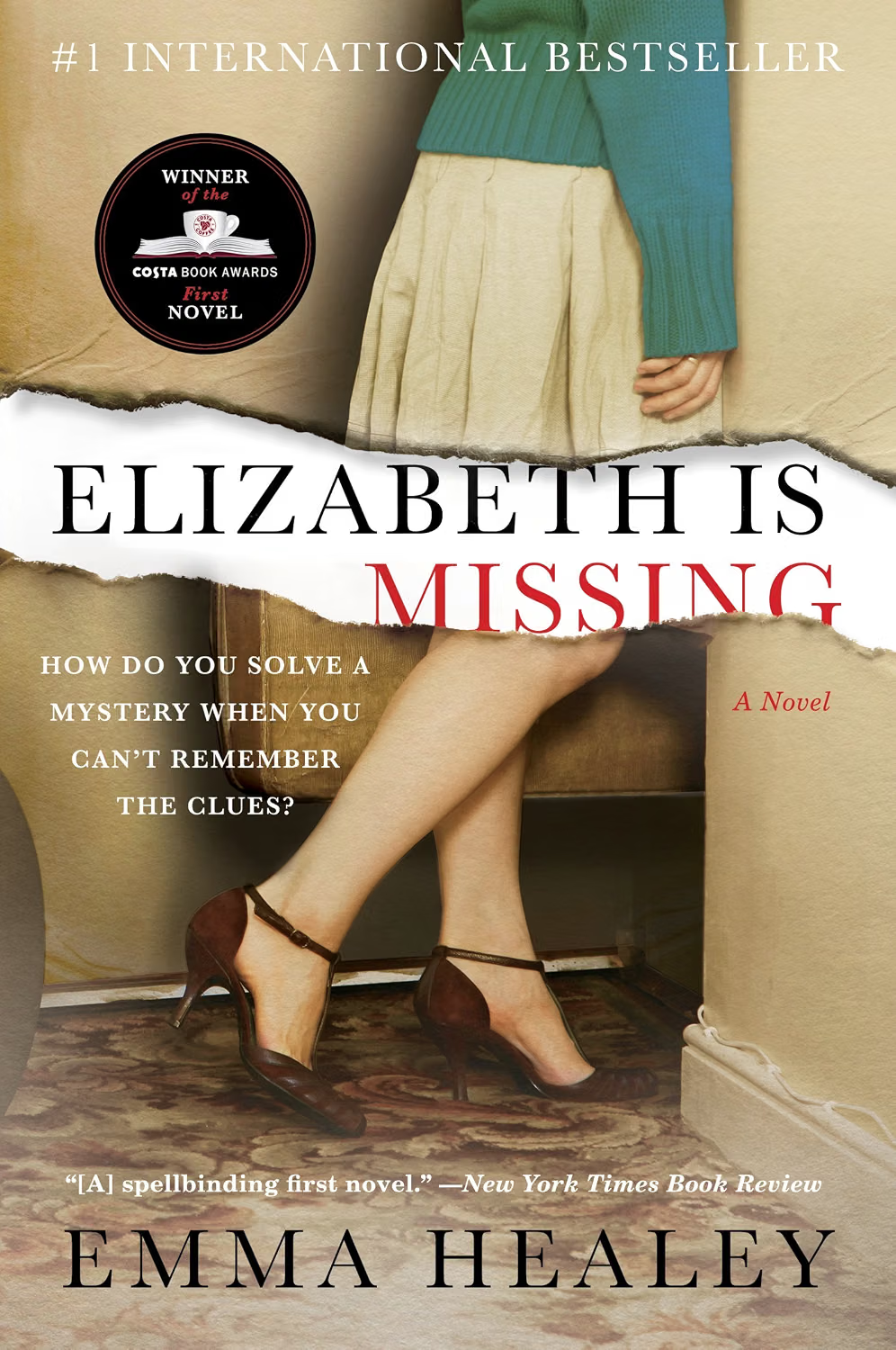
Elizabeth Is Missing by Emma Healey
Read this if you want: A mystery that also gives you a window into what memory loss can feel like from inside the mind of someone experiencing it.
Maud is in her eighties, and she knows something is wrong.
Her memory is becoming increasingly unreliable. She writes herself notes to remember things, but even the notes don’t always make sense to her. The one thing she is certain about is that her friend Elizabeth is missing.
But is she?
As Maud tries to solve the mystery, the story moves between the present and memories from decades earlier.
That structure is what makes Elizabeth Is Missing so effective.
The reader isn’t simply observing someone with dementia.
We are experiencing the uncertainty with her.
We know there is something she is trying desperately to remember, but we don’t always know what it is either.
The result is both a mystery and a deeply human exploration of memory, aging, friendship, and the fear of losing one’s grip on reality.
Why it stays with you: Because it makes the experience of memory loss feel immediate and personal rather than clinical.
The Things We Keep by Sally Hepworth
Read this if you want: A story about dementia, family, friendship, and the unexpected relationships that can develop in a memory-care community.
This is one of those books that initially feels like it is going to be about one thing and then becomes something much more.
The story centers around a memory-care facility and the people who live there, along with the staff and family members whose lives intersect with them.
What I appreciate about this book is that the people living with dementia aren’t reduced to their diagnosis.
They have personalities.
Histories.
Secrets.
Relationships.
And lives that existed long before anyone began thinking of them as patients.
The story also explores the complicated emotions of the people who love them. There is guilt, frustration, sadness, humor, and the difficult process of accepting that caring for someone sometimes means making decisions they can no longer make for themselves.
Why it stays with you: Because it reminds us that the person you know is still there, even when the way you know them begins to change.


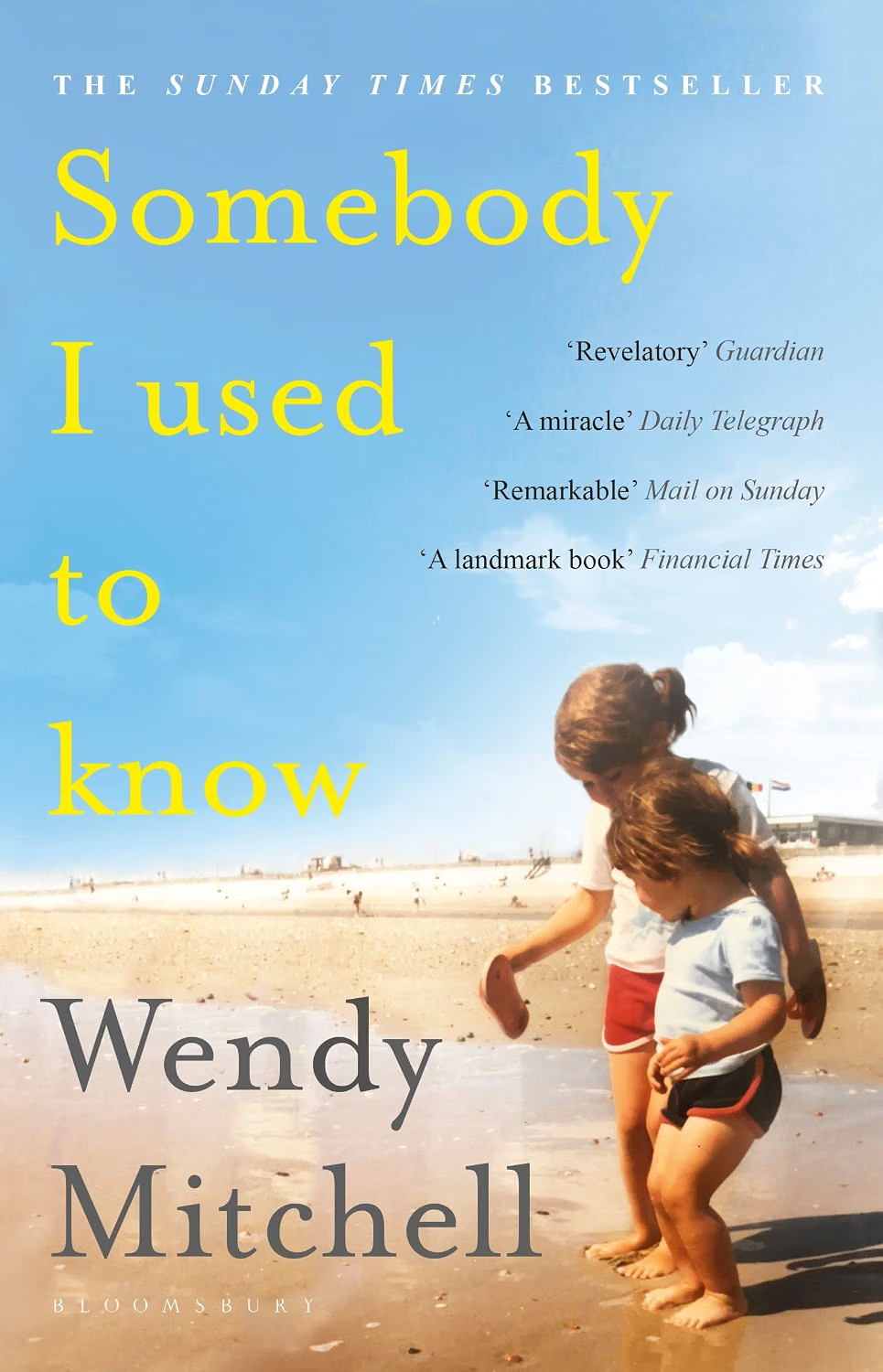
Somebody I Used to Know by Wendy Mitchell
Read this if you want: A first-person account of younger-onset dementia that will change the way you think about the disease.
Wendy Mitchell was just 58 when she was diagnosed with early-onset Alzheimer’s disease.
She was independent, active, and working when she began noticing changes she couldn’t explain.
In Somebody I Used to Know, Mitchell writes about what it is actually like to live with dementia while remaining aware of what is happening to your brain.
And that perspective is incredibly important.
It is easy to think about dementia entirely from the outside.
What does the caregiver see?
What does the family experience?
What happens when someone forgets?
Mitchell asks us to consider a different question:
What does it feel like to be the person who is forgetting?
Her writing is honest about the frustrations and losses, but it is also remarkably determined. She doesn’t allow the diagnosis to become her entire identity.
Why it stays with you: Because it challenges the assumption that a dementia diagnosis means a person immediately stops being capable, interesting, engaged, or fully themselves.
The Leisure Seeker by Michael Zadoorian
Read this if you want: A tender, bittersweet story about an older couple facing Alzheimer’s and the realities of aging together.
John and Ella have been married for decades. They are aging, their health is declining, and Ella is dealing with Alzheimer’s.
Rather than simply accepting the limitations being placed around them, they decide to take one last road trip together.
The premise could easily have become sentimental.
Instead, it becomes something more complicated.
Funny in places.
Sad in others.
And deeply human throughout.
There is something particularly moving about a couple who have spent most of their lives together trying to figure out what it means to continue being a couple when the circumstances around them are changing so dramatically.
Why it stays with you: Because it asks a surprisingly hopeful question: How do we continue to live when life no longer looks the way we expected?

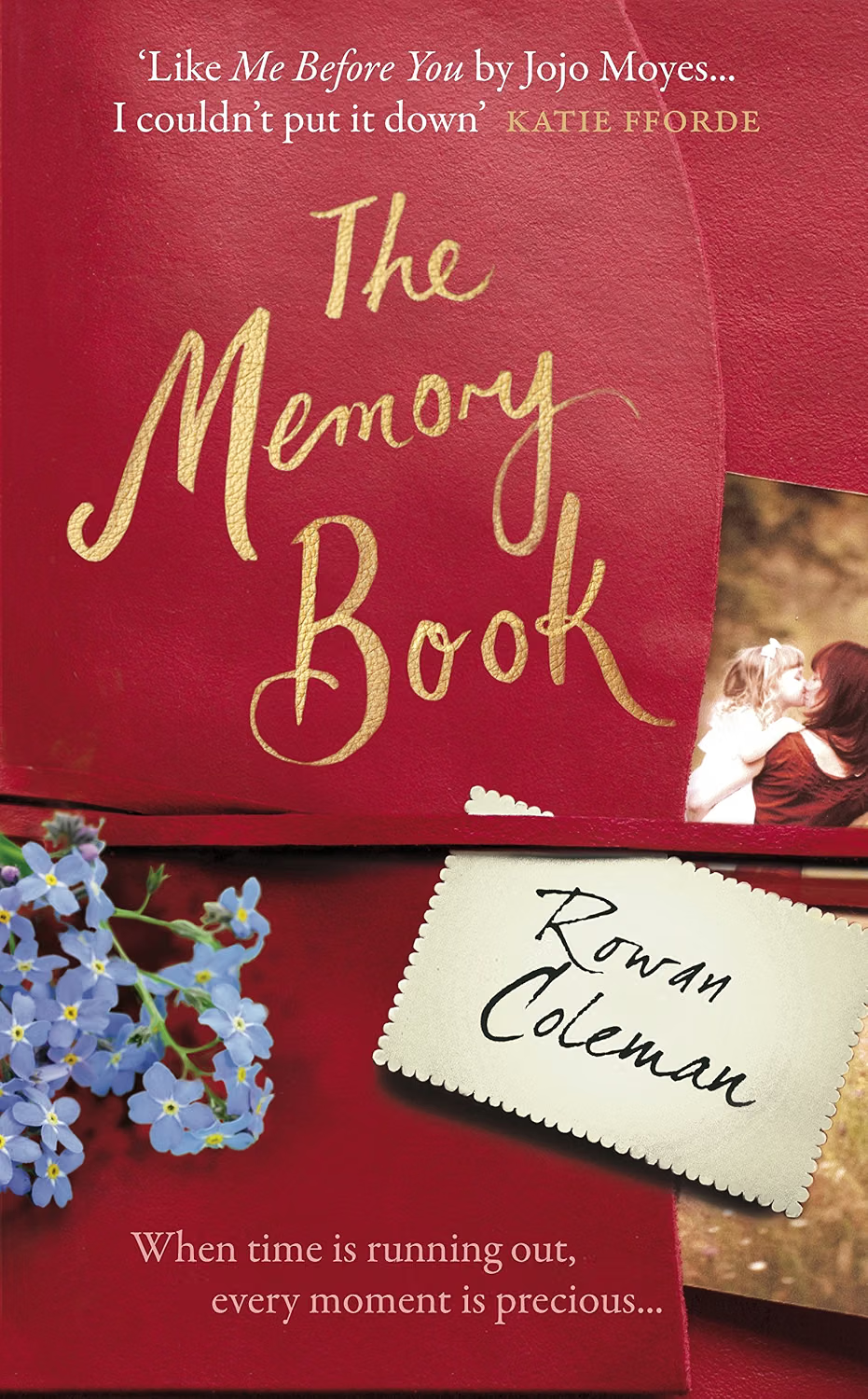
The Memory Book by Rowan Coleman
Read this if you want: A story about family, memory, and the heartbreaking possibility of forgetting the people you love.
The Memory Book explores what happens when a mother begins losing her memories and her daughter realizes that the future may look very different from the life she imagined.
The premise is painful because it gets at one of the deepest fears surrounding dementia: not simply forgetting facts, but forgetting the people and relationships that make up our lives.
But the story also explores something more hopeful.
Memory doesn’t exist only in our minds.
It can live in photographs.
In recipes.
In familiar songs.
In stories we tell.
In the people who remember for us.
That idea is one of the reasons books like this can be so meaningful.
Why it stays with you: Because it reminds us that even when memories become fragile, the lives we’ve built together leave traces in other people.
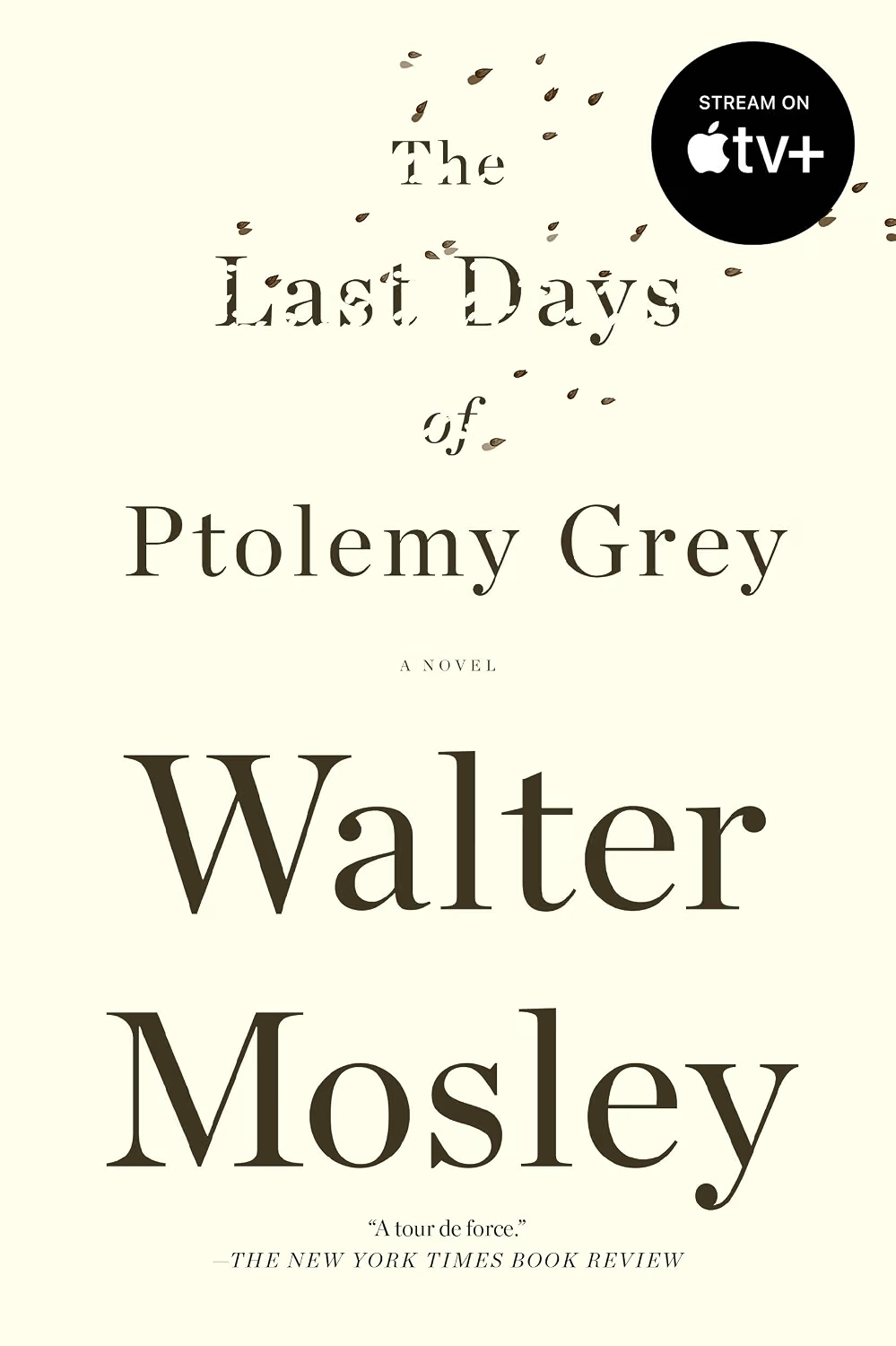
The Last Days of Ptolemy Grey by Walter Mosley
Read this if you want: A thought-provoking story about memory, dignity, and what it means to have a chance to reclaim what you’ve lost.
Ptolemy Grey is an elderly man living with dementia when an experimental treatment offers him the possibility of temporarily regaining his cognitive abilities.
And that premise opens the door to some fascinating questions.
What would you do if you suddenly had your memories and mental clarity back?
What would you want to accomplish?
Who would you want to see?
What truths would you finally be able to confront?
And perhaps most importantly, what would you do with the knowledge that the clarity won’t last forever?
This is a more unusual addition to the list, but I think it belongs here because it isn’t simply about memory loss.
It is about what we do with the time and abilities we have while we have them.
Why it stays with you: Because it makes you think about memory not only as something we lose, but as something that gives our lives meaning.
What These Books Can Teach Us About Dementia
Reading books about dementia is not the same as experiencing it firsthand.
And no novel can tell us exactly what our own loved one is going through.
But I do think these stories can help us become better observers.
They can help us pause before assuming someone is being difficult.
They can help us recognize that repeating a question may not be an attempt to frustrate us.
They can remind us that a person who has forgotten something may still understand the emotion surrounding it.
And perhaps most importantly, they can help us think differently about what it means to maintain a relationship when memory is changing.
Before I Forget particularly made me think about this.
If someone doesn’t remember a conversation we had yesterday, does that mean the conversation wasn’t meaningful?
If someone doesn’t remember that we visited, does the visit still matter?
If someone no longer recognizes us consistently, can they still feel safe with us?
I think these are questions many families eventually find themselves asking.
And sometimes the answer may be to stop measuring the relationship entirely by what the person can remember.
Maybe the goal isn’t always to make them remember. Maybe sometimes it is simply to make the moment feel good, safe, familiar, or connected while we’re in it.
The Person Beyond the Diagnosis
One of the things I found myself thinking about while putting this list together is how quickly dementia can become the first thing we see.
Someone becomes “the person with Alzheimer’s.”
“The person who can’t remember.”
“The person who needs care.”
But before any of that, they were someone.
They were a mother.
A father.
A wife.
A husband.
A friend.
A teacher.
A neighbor.
Someone who had favorite songs and favorite foods and strong opinions and inside jokes.
Someone who loved certain people deeply.
Someone who had an entire life before their memory began to change.
These books remind us to keep seeing that person.
When Someone You Love Is Losing Their Memory
If you’re reading this because someone you love is experiencing memory loss, I hope you don’t feel that you have to have all the answers.
You probably won’t.
And every family will find its own way through it.
But perhaps one of the most useful things we can do is become curious rather than simply frustrated.
Instead of asking, “Why can’t they remember this?”
We might ask, “What might this moment feel like for them?”
Instead of constantly correcting:
“No, that’s not what happened.”
We might sometimes ask:
“Tell me about it.”
Instead of measuring every interaction by whether they recognized us, remembered our conversation, or understood exactly what was happening, we might begin paying attention to something else.
Did they feel comfortable?
Did they laugh?
Did they feel loved?
Did they feel safe?
Those things matter too.
And perhaps that is one of the gifts these books offer.
They don’t make dementia easy.
But they can make it a little easier to understand.

The Well-Spent Take
We may not be able to understand exactly what it feels like to lose our memories until it happens to us. But we can try to understand what it might feel like for someone we love.
These books give us a glimpse into that world. They can help us see beyond the diagnosis, reconsider the way we respond to forgotten conversations and repeated questions, and find new ways to stay connected when the relationship begins to change.
And perhaps the best part is that we don’t have to read a medical textbook to do it. We can simply read a beautiful story.
Explore More
If you’re ready to keep exploring books that make us think a little differently about life, memory, relationships, and our next chapter, keep reading with these ideas from The Well-Spent Life:
- Armchair Travel: 5 Books That Will Take You Somewhere New
- Books That Stay With You Long After the Last Page