

Books for Empty Nesters: 12 Books for the Life That Comes Next
The first night your child doesn’t come home, the house sounds different.
Not necessarily sad. Just different.
There is no bedroom door closing upstairs. No one asking what’s for dinner. No shoes by the door. No last-minute text asking if you can pick something up.
And then, one morning, you realize something else.
You have time.
Time that used to belong to soccer games, college applications, family dinners, carpools, homework, holidays, and everyone else’s schedules.
So what do you do with it?
For some women, the answer is travel. For others, it is rediscovering a hobby, changing careers, getting creative, spending more time with friends, or simply figuring out who they are when they are no longer needed quite so much by everyone else.
And sometimes, you start by picking up a good book.
These are not all books specifically written for empty nesters. In fact, some have very little to do with empty nesting at all.
That’s intentional.
Because this chapter of life isn’t really about having an empty nest. It’s about having more room to decide what comes next.
Editor’s Note: When you buy through links on The Well-Spent List, we earn an affiliate commission at no extra cost to you. As an Amazon Associate, I earn from qualifying purchases.
If You’re Wondering Who You Are Now
The transition into an empty nest can bring up a surprisingly big question:
Who am I when being a mom isn’t taking up quite so much of my time?
These books are good companions for that question.
From Mom to Me Again by Melissa Shultz
If you want a book that speaks directly to the transition, start here.
Melissa Shultz writes about the emotional shift that happens when children leave home and the role of full-time motherhood changes. It is honest about the mixed emotions without suggesting that you need to immediately reinvent yourself.
Read this if: You’re somewhere between “I’m ready for this” and “Wait, what am I supposed to do with myself now?”
Why it belongs on the list: Sometimes the most helpful thing is simply realizing that someone else understands exactly what you’re experiencing.

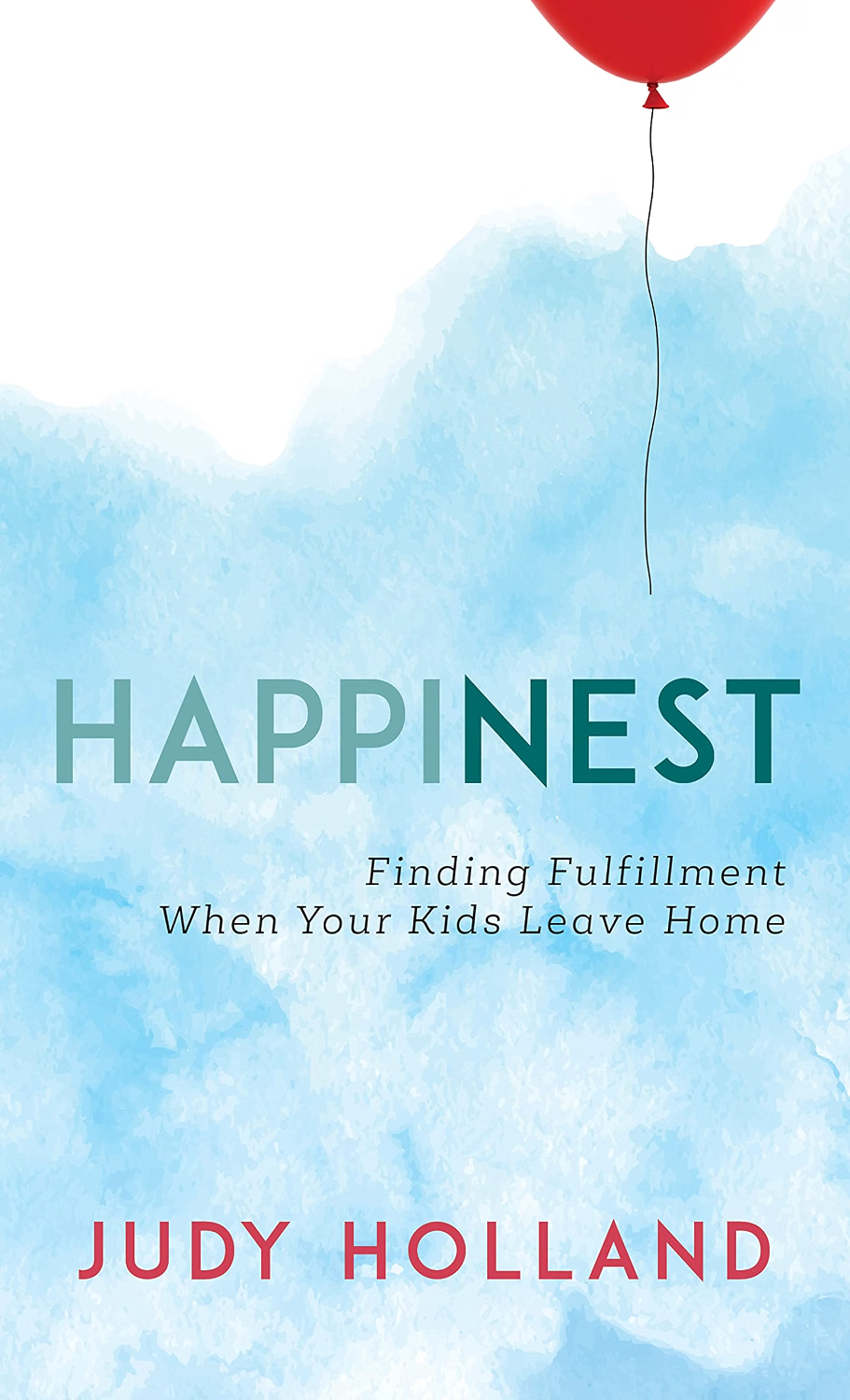
HappiNest by Judy Holland
What if the empty nest isn’t something to get through, but something to build from?
HappiNest looks at creating a satisfying life after the years of intense parenting, with an emphasis on happiness, purpose, relationships, and figuring out what makes this stage meaningful.
Read this if: You are ready to stop thinking about what you’ve lost and start thinking about what you might gain.
Why it belongs on the list: It shifts the conversation from “empty” to possibility.
The Artist’s Way by Julia Cameron
You don’t have to consider yourself an artist to read The Artist’s Way.
Cameron’s 12-week program encourages readers to reconnect with creativity through practices such as Morning Pages and Artist Dates.
And this is exactly the sort of book that can make sense when you suddenly have a little more space in your life.
Maybe you’ve always wanted to write.
Maybe you want to paint.
Maybe you simply want to become curious again.
Read this if: You have a creative side you’ve been putting off for years.
Why it belongs on the list: You may discover that creativity doesn’t have to be productive to be worthwhile.

If You’re Ready to Try Something New
Once the initial transition settles down, another question often appears:
What if I actually tried something different?
These books are less about empty nesting specifically and more about creating a life that feels interesting, intentional, and distinctly yours.
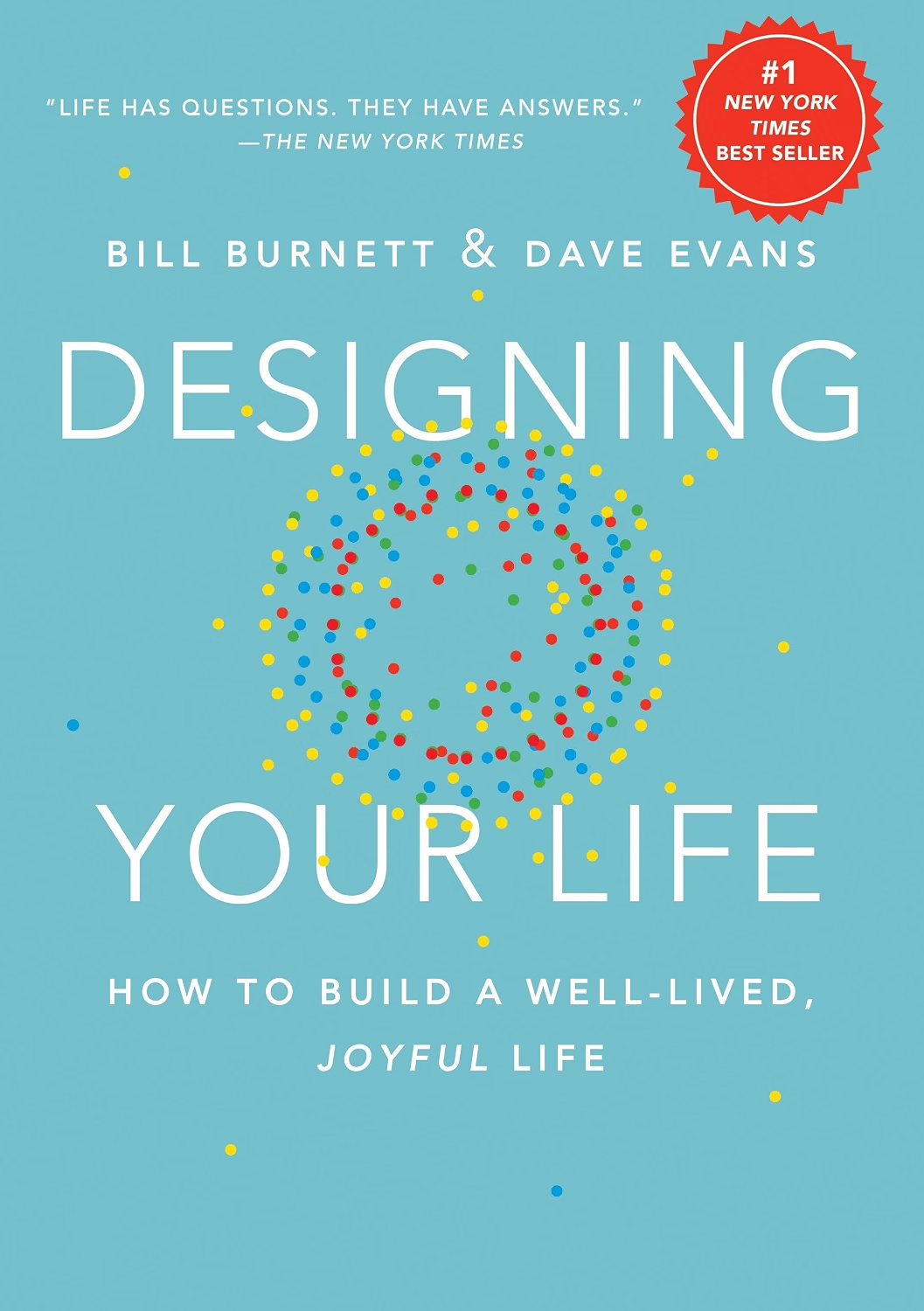
Designing Your Life by Bill Burnett and Dave Evans
What if you stopped waiting to figure out your one perfect next chapter and started experimenting instead?
That’s the premise behind Designing Your Life, which applies design-thinking principles to building a meaningful and fulfilling life. The authors encourage readers to explore possibilities, test ideas, and adjust along the way rather than waiting for perfect clarity.
Read this if: You have several ideas about what you might do next but no idea which one is right.
Why it belongs on the list: It makes reinvention feel less intimidating and much more like a process of exploration.


Year of Yes by Shonda Rhimes
This is not an empty-nest book. It’s a book about saying yes to possibilities that might otherwise scare you.
Rhimes writes about stepping outside her comfort zone and deliberately saying yes to experiences she would normally avoid.
Read this if: You’ve spent years saying yes to everyone else and are ready to say yes to yourself.
Why it belongs on the list: Sometimes the next chapter begins with one small invitation, one new experience, or one slightly uncomfortable yes.

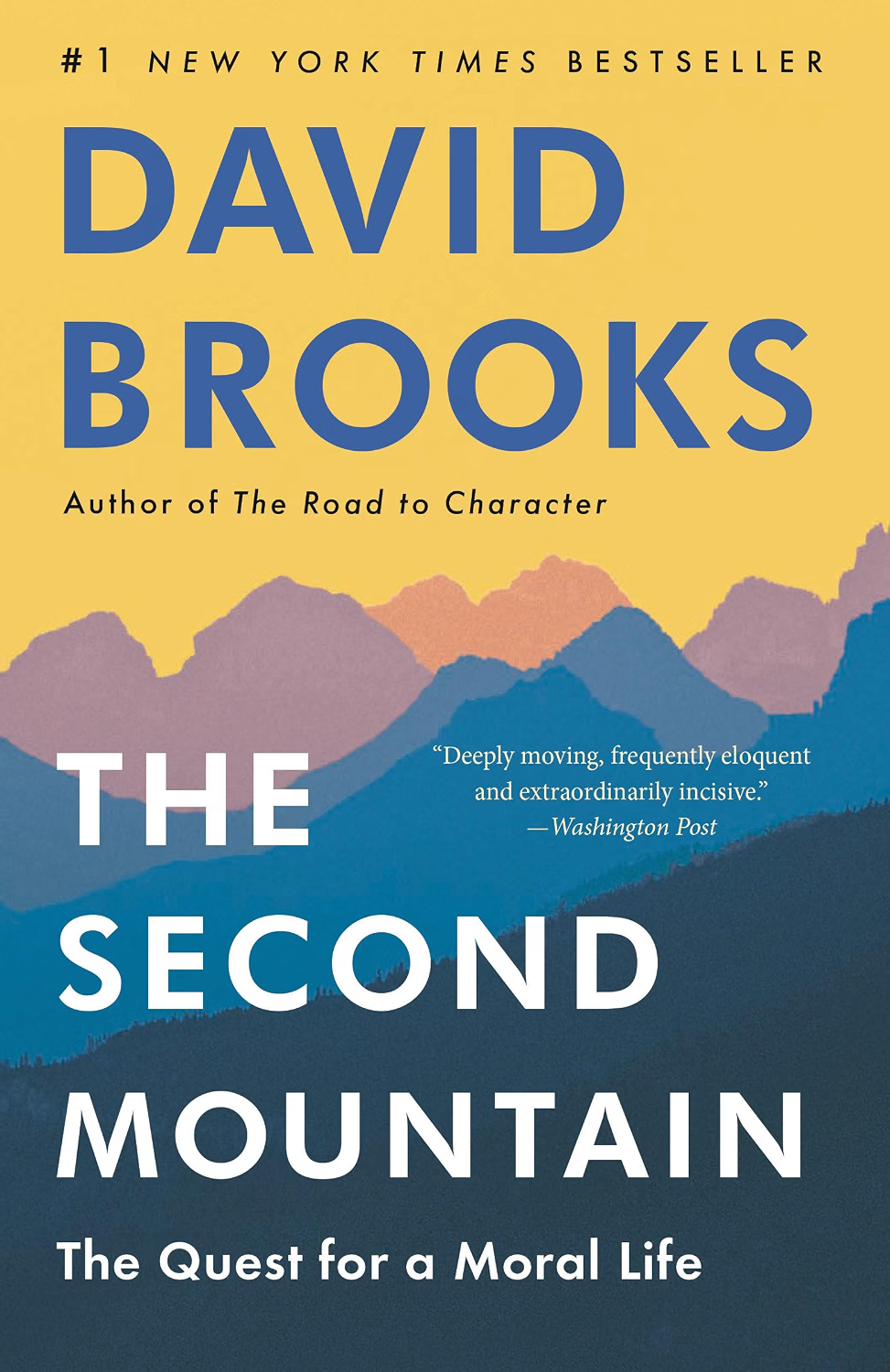
The Second Mountain by David Brooks
Brooks explores what he describes as the second half of life, when people begin thinking less about achievement and more about commitment, relationships, service, and meaning.
You don’t have to agree with every idea in the book to find the questions interesting.
Read this if: You’re wondering whether success means something different to you now than it did twenty years ago.
Why it belongs on the list: It encourages a deeper look at what makes a life feel meaningful, not merely full.
If You Need a Story to Get Lost In
Sometimes you don’t need a book to help you figure anything out.
Sometimes you just want to disappear into a really good story.
These are the books I’d reach for when you want something that makes you look up from the last page and think about life a little differently.
The Midnight Library by Matt Haig
Imagine being able to see all the different lives you might have lived if you’d made different choices.
That’s the premise behind The Midnight Library, a novel about regret, possibility, and the complicated question of what actually makes a life worth living.
Read this if: You’ve ever wondered, “What if I had done things differently?”
Why it belongs on the list: It is a reminder that the life in front of you still contains possibilities.

Remarkably Bright Creatures by Shelby Van Pelt
This is one of those books that sneaks up on you.
At its center is Tova Sullivan, a widow working nights at an aquarium, and an unusually perceptive giant Pacific octopus named Marcellus.
It is ultimately a story about loneliness, friendship, grief, connection, and unexpected second chances.
Read this if: You want something warm, hopeful, and genuinely charming.
Why it belongs on the list: It is proof that a new chapter doesn’t have to arrive with a grand plan. Sometimes it begins with an unexpected connection.

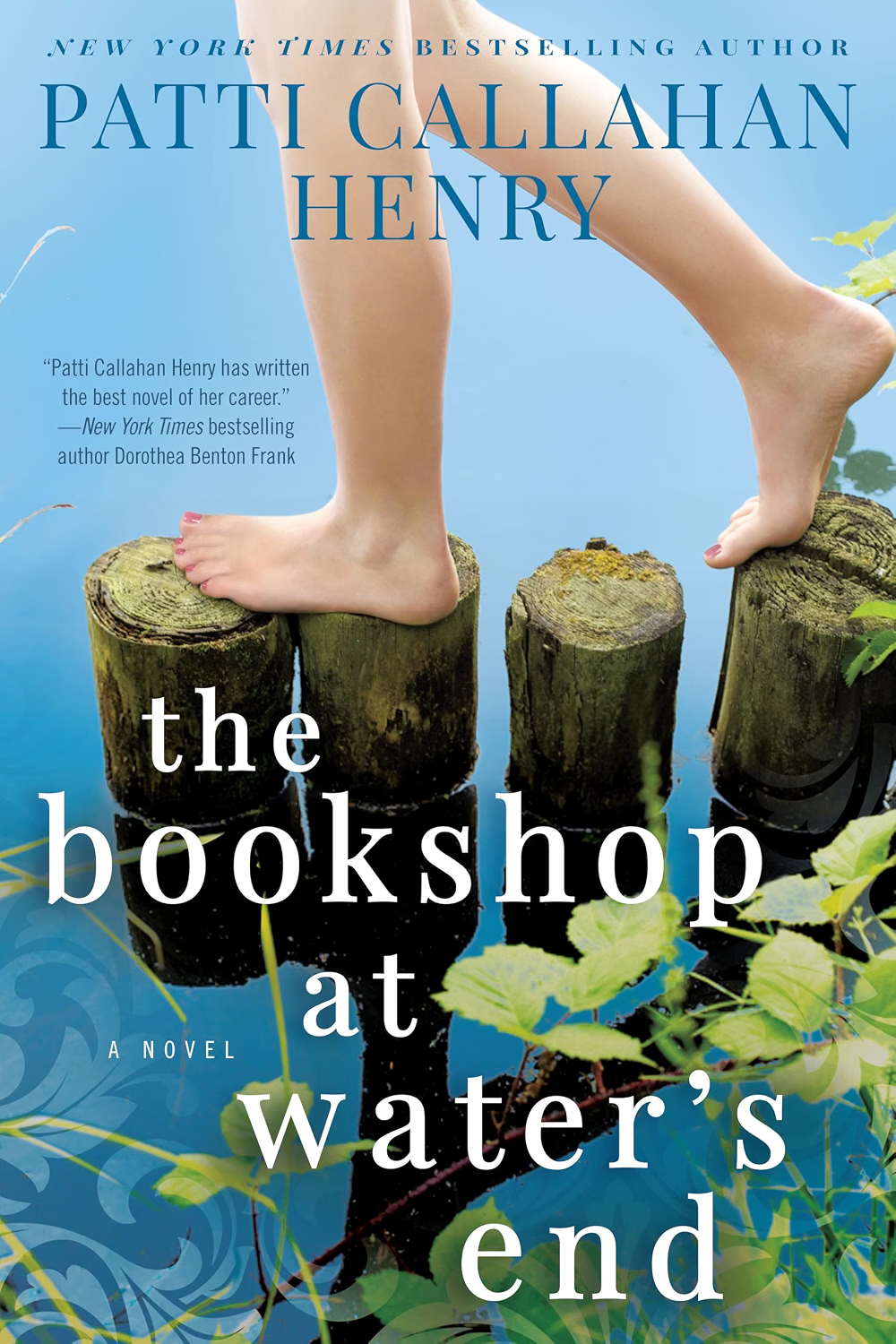
The Bookshop at Water’s End by Patti Callahan Henry
Two women arrive at a small bookshop in a South Carolina town looking for a change.
There are friendships, heartbreak, books, and the possibility of beginning again.
Read this if: You want a book that feels like a little escape without requiring a plane ticket.
Why it belongs on the list: It has that particular appeal of stories where people step outside the lives they’ve always known and discover something waiting for them.
If You Want a Little Perspective
Then there are the books you read slowly.
The ones you underline.
The ones that make you pause because a sentence seems to have arrived at exactly the right moment.
The Comfort Book by Matt Haig
This is less of a traditional book and more of a collection of thoughts, observations, lists, and reflections to dip into whenever you need them.
Read this if: You want something you can pick up for ten minutes rather than commit to from beginning to end.
Why it belongs on the list: There is something lovely about a book that doesn’t ask you to accomplish anything.

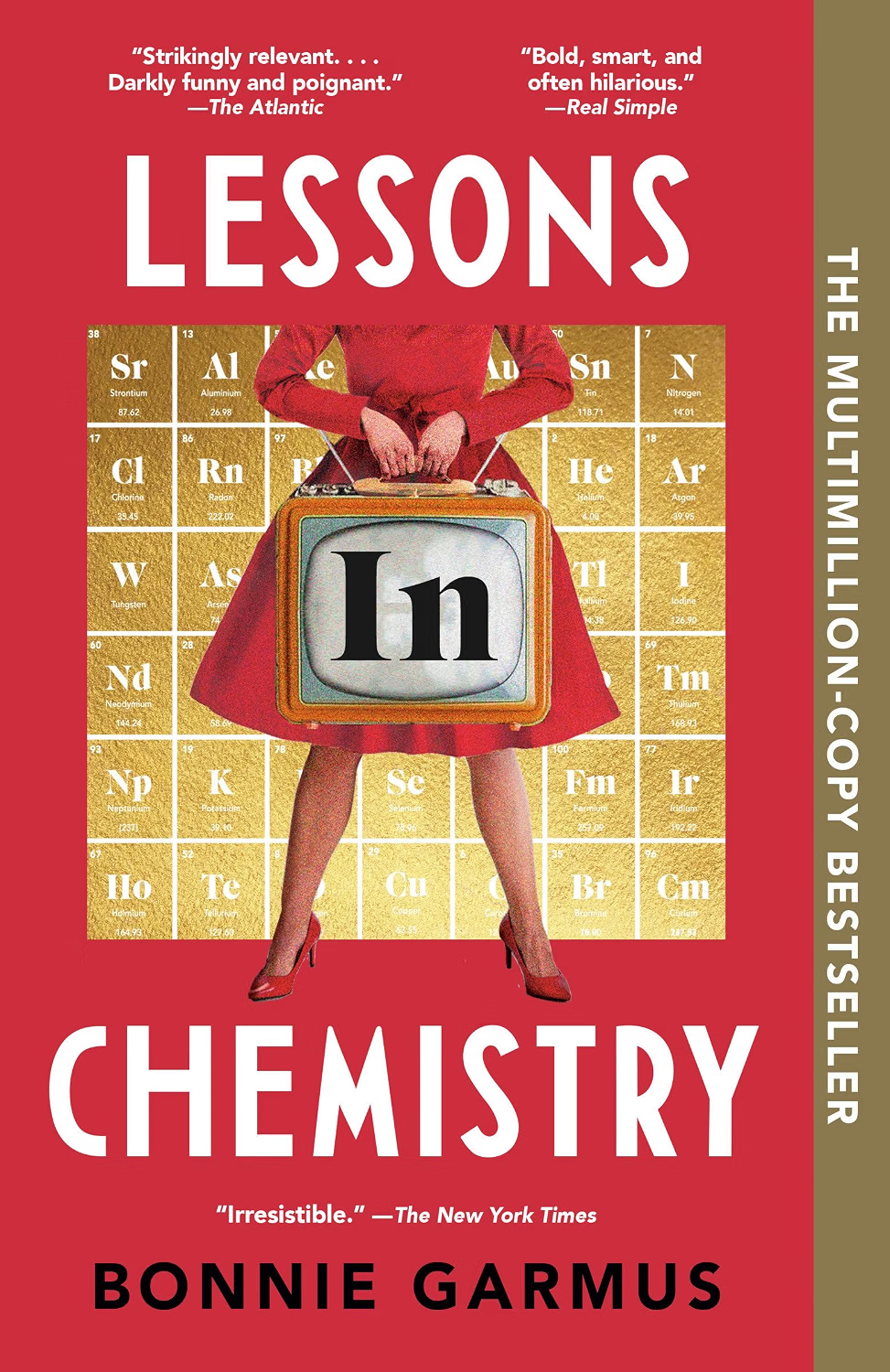
Lessons in Chemistry by Bonnie Garmus
Set in the 1960s, this novel follows Elizabeth Zott, a brilliant chemist whose professional ambitions collide with the expectations placed on women at the time.
It’s funny, sharp, unconventional, and ultimately a story about independence, identity, and refusing to let other people decide what your life should look like.
Read this if: You like your fiction smart, funny, and a little unconventional.
Why it belongs on the list: Elizabeth Zott is a wonderful reminder that being underestimated does not mean you have to stay that way.
The Wisdom of Insecurity by Alan Watts
This is the unexpected choice on the list.
Watts explores our tendency to spend so much time worrying about the future that we miss the life happening right now.
That idea can feel particularly relevant during a transition, when it is tempting to spend all your energy planning the next version of yourself.
Read this if: You are tired of feeling like you need to have the next five years figured out.
Why it belongs on the list: Maybe the next chapter doesn’t need to be completely planned. Maybe it just needs to be lived.

If You Only Read Three
If twelve books feel like twelve more things to add to your list, start with these three:
For understanding the transition:
From Mom to Me Again
For figuring out what might come next:
Designing Your Life
For getting lost in a really good story:
Remarkably Bright Creatures
Together, they offer three very different ways into this stage of life: understanding where you are, exploring where you might go, and remembering that sometimes you don’t need to work on yourself at all. Sometimes you just need a good story.
You don’t have to fill the space your children left behind. You get to decide what deserves to fill it now.
If I Were Sitting in My Quiet House Tonight…
I would probably start by thinking about what I actually feel like doing now that nobody needs me to do anything.
Would I want to learn something?
I’d pick up The Artist’s Way.
Would I want to rethink what the next few years could look like?
I’d read Designing Your Life.
Would I want a story that reminded me that life can still surprise me?
I’d choose Remarkably Bright Creatures.
Would I want something that made me laugh and think?
And if I were feeling a little nostalgic for the life that came before this one, I might choose From Mom to Me Again.
Not because I needed to figure everything out.
Just because sometimes it helps to have someone put words to a transition you are still learning how to describe.
The thing I like most about this list is that none of these books say, “Here’s how to fix your empty nest.”
Because your life doesn’t need fixing.
It’s changing.
And there is a difference.

The Well-Spent Take
There is a temptation to think of the empty nest as the end of something.
And in some ways, it is.
The years of being needed in quite the same way are over. The routines change. The house changes. Even your identity can feel a little unfamiliar for a while.
But that doesn’t mean your most interesting chapters are behind you.
You may have more freedom now than you’ve had in decades.
More perspective.
More confidence.
More resources.
And, perhaps most importantly, more understanding of what actually matters to you.
So read the book that speaks to you.
Read the one that makes you curious.
Read the one that takes you somewhere completely different.
Or read absolutely nothing for a while and sit in the quiet.
There is no correct way to begin this chapter.
Your children may have left home. Your life has not.
And that might be the most interesting part.
Explore More
If you’re in the middle of figuring out what this next chapter looks like, you might also enjoy:
- Armchair Travel: 5 Books That Will Take You Somewhere New
- Books That Stay With You Long After the Last Page
- What I Wish Someone Had Told Me About Life After the Kids Leave
- I Thought That Part of My Life Was Over. I Was Wrong.
- Why the Empty Nest Was Good for Our Relationship